
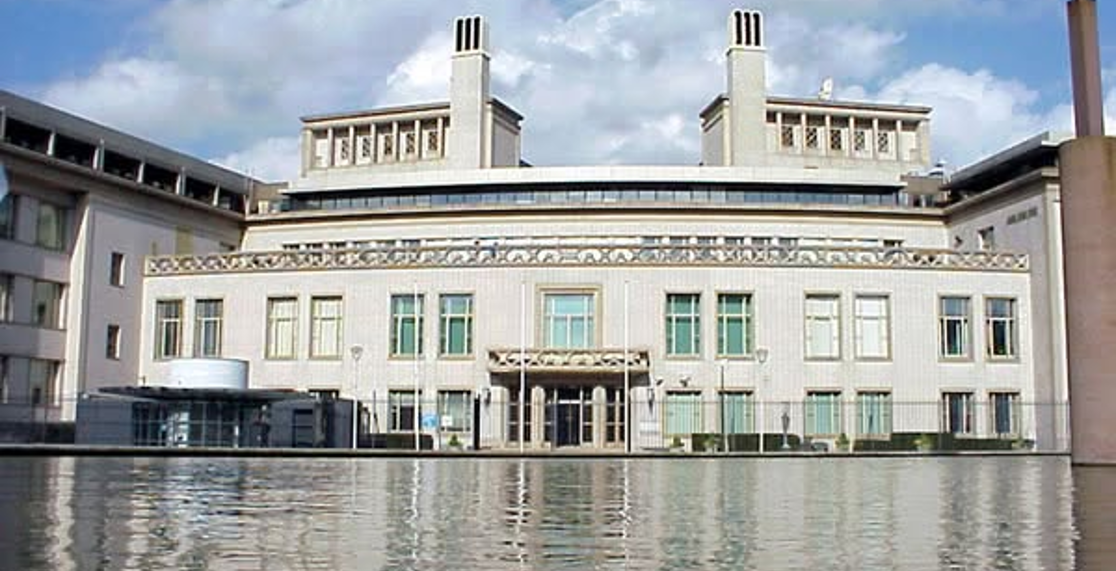
Analyzing the institution of guilty pleas through examples from the International Criminal Tribunal for the former Yugoslavia in The Hague, Katarina Beširević explores the relationship between judicial and “human” truth, highlighting the crucial role that judicially established facts play in understanding this complex dynamic.
The article is written by Katarina Beširević, a research associate and doctoral candidate at the Department of History, Faculty of Philosophy, University of Belgrade, who joined our team as part of the study stay program at the SENSE Center for Transitional Justice.
In the chapter devoted to Biljana Plavšić in her book They Would Never Hurt a Fly, Slavenka Drakulić wrote that the first postwar president of Republika Srpska set a positive example for her former colleagues Radovan Karadžić and Ratko Mladić, as well as for the “Croatian ‘heroes’” Ante Gotovina and Janko Bobetko, by admitting her responsibility for crimes committed against Muslims and Croats. Drakulić concluded the chapter on the only woman tried before the International Criminal Tribunal for the former Yugoslavia (ICTY) optimistically, mocking the men whose mouths had been full of courage and heroism during the wars, who demonstrated that same “heroism” against unarmed civilians, and who in 2003, when the book was first published, were still “cowardly in hiding”. Unfortunately, the author could not have foreseen that seven years later Biljana Plavšić would undermine her own confession by telling a Swedish media outlet that she had done nothing wrong and had merely “sacrificed” herself in order to negotiate her sentence. In doing so, the trace of moral superiority attributed to her lost its significance, and Drakulić herself admitted she had been mistaken. Yet the confession itself remains, whether Plavšić remembers it or not, and together with nineteen others it raises a series of questions about the significance of such acts before an international criminal court and the broader effects these confessions might have.
If we consider that the ICTY, like the Nuremberg trials before it, had far broader and more complex “extralegal” aspirations than merely convicting individuals (for example, assisting post-Yugoslav societies in transition and contributing to peace-building in the region), a guilty plea carries implications far beyond an individual’s moral redemption. In judicial proceedings intended to help uncover the truth and clarify a complex historical period such as the 1990s in the former Yugoslavia, a guilty plea should serve as clear confirmation that the crimes listed in the indictment did in fact occur. By speaking about her role in crimes committed during the wars, Biljana Plavšić admitted participation in “persecutions on political, racial and religious grounds”, which included “forced displacement and deportation of non-Serb populations, their unlawful detention in camps, and everything that took place in those camps”. In return, the plea agreement required the prosecution to drop charges of “genocide and complicity in genocide, murder, extermination, forcible deportation, and inhumane acts against civilians”. As noted in a SENSE report on the agreement, the acts Plavšić admitted “differ from the gravest crime, genocide, only in that the prosecution would have had to prove specific intent to destroy Bosnian Muslims and Croats as an ethnic or religious group”. The difference in legal qualification does not call into question whether crimes were committed, since abundant evidence (and the perpetrator’s own admission) confirms that they were; so, from a historiographical perspective, this distinction should not affect the study of past events. (A similar example would be the overturned convictions of Momčilo Perišić and Ante Gotovina by the Appeals Chamber, which do not invalidate the historical facts established in their first-instance rulings by the Trial Chambre.) At the same time, a confession gives those facts additional weight and a personal dimension and may offer insight into why individuals committed crimes. More broadly, assuming personal responsibility (should) encourage societies to reconsider their own role in the turmoil of the 1990s.
It appears that Biljana Plavšić understood this, otherwise she likely would not have continued going back to her statement of guilt delivered before the Tribunal on December 17, 2002, a statement that seemed more like a performance and an apology to the Serbian people for their “tarnished honor” than genuine repentance. An analysis of her speech suggests that she insisted any collective reckoning with the past was irrelevant, since she was the one who had “sacrificed” herself. She emphasized that her responsibility “certainly should not extend to our Serbian people, who have already paid a terrible price for our leadership”, even though this was not in question before the court. The Hague Tribunal was mandated exclusively to prosecute individuals and unambiguously had no jurisdiction over states. Notably, insinuations about some conspiratorial imposition of collective guilt always seem to come from those who bear individual responsibility for the crimes committed in the 1990s, and such claims are deeply harmful to a society’s collective consciousness.
Whether Plavšić repented sincerely or not (not getting into the moral aspects of a false repentance), whether she considers herself personally responsible or not, the purpose of her guilty plea in historical scholarship carries the same weight as those guilty pleas in front of ICTY that appear sincere. The facts established during judicial investigations into crimes committed in Bosnia and Herzegovina are merely further verified by guilty pleas. Even if the confessions are later withdrawn, the historical weight of established facts is not diminished; rather, such actions add another dimension to the study of this past.
Among the twenty individuals who pleaded guilty before the Tribunal, there was one other high-ranking political figure besides Biljana Plavšić. In his statement before the court on January 27, 2004, Milan Babić, former prime minister and president of the Republic of Serbian Krajina, openly admitted participating in “the worst kind of persecution of people simply because they were Croats and not Serbs” and acknowledged that innocent people were “persecuted […], evicted forcibly from their houses […], and killed.” He directly asked forgiveness from Croats for “their brother Serbs” and appealed “for the Serb people to turn to the future”. The fact that, after taking over responsibility, Babić mentioned the victims as well, expressing hope that his remorse might “make it easier for the others to bear their pain and suffering”, should not be disregarded. Babić’s guilty plea was not his only contribution to uncovering the past. He testified in numerous other trials, including twelve days of testimony in the trial of Slobodan Milošević, as SENSE reported. Like Biljana Plavšić, Babić seemed to understand the weight and broader significance of his confession, but unlike her, he stood by his statement. In doing so, he provided a personal guarantee that the events described in his indictment had indeed taken place, and that he, as well as the others he witnessed against, were responsible.
Assuming responsibility by leading political actors undoubtedly reveals more about state involvement in crimes against civilians during the wars, and therefore, it carries greater weight. Nevertheless, guilty pleas by lower-ranking political and military figures must not be overlooked. Alongside the abundance of archival records and witness testimonies, they are crucial historical sources for researching the committed war crimes. A soldier in the 10th Sabotage detachment of the Bosnian Serb Army, Dražen Erdemović was the first to appear before the Tribunal’s judges in November 1996 and to admit his role in the Srebrenica massacre. Like Babić, he later testified in numerous other trials. His confession was crucial for continuing the investigation and filing further indictments related to Srebrenica. It was also significant in the discussions of command responsibility and the role of ordinary soldiers in the chain of command – of those who did not make decisions but carried them out (in his case under coercion). Erdemović stated the following: “I have lost many very good friends of all nationalities only because of that war, and I am convinced that all of them, all of my friends, were not in favor of a war. I am convinced of that. But simply they had no other choice. This war came and there was no way out. The same happened to me.” What we find in the SENSE archive is that he described how on July 16, 1995, under orders of commander Pelemiš, he participated in the execution of civilians transported from Srebrenica to the Branjevo farm, and when he said he did not want to shoot and was not feeling good about it, he was told by squad member Gojković that if he refused, he could line up and be shot himself. The unraveling of the massacre committed in Srebrenica was also aided by the guilty pleas of Momir Nikolić (Assistant Commander for Security and Intelligence of the Bosnian Serb Army) and Dragan Obradović (a senior officer and commander in the Bosnian Serb Army). According to SENSE’s reporting, in 2003 both pleas were considered capable of delivering a “blow to revisionism”.
Guilty pleas before the Hague Tribunal sparked numerous debates about (in)sincerity, about the impacts on victims and their families, and about reconciliation. What we can assert with certainty is that guilty pleas before the ICTY did not bring reconciliation to the post-Yugoslav space. One argument for the failure in this attempt points to the insincerity of some guilty pleas, negotiated in exchange for reduced sentences (for instance, Plavšić). However, it is equally important to note that only 20 out of 161 indicted individuals accepted responsibility for the crimes they are charged with. Moreover, the profiles of the people who pleaded guilty should be taken into consideration. Aside from two high-ranking politicians, one of whom later distanced herself from her plea and the other who committed suicide, the remaining individuals were of lower political or military rank. Even without assessing the sincerity of their statements, although these pleas carry considerable historiographical weight, their capacity to override dominant narratives in the societies in the region remains limited. The fact is that the denial of crimes might be more marginal today had figures such as Dario Kordić or Ratko Mladić acknowledged responsibility: instead, today they are being presented in Croatia and Serbia as national heroes, and not war criminals. So, until stronger resistance to dominant narratives emerges, it remains the responsibility of researchers to continually point to established facts, which is much more straightforward in cases where the accused themselves accepted responsibility. To plead guilty before the Hague Tribunal, therefore, means becoming a permanent witness to history and to the victims; not merely testifying that crimes did occur (as we already know from extensive documentation and testimonies), but affirming that they did not simply “happen”, yet that they were committed by actual human beings.
Katarina Beširević