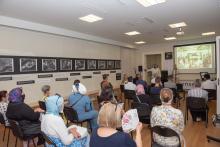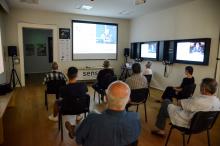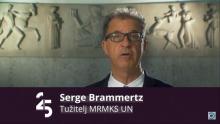
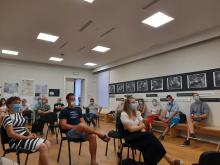
The 26th anniversary of Srebrenica genocide, the gravest crime committed in Europe after the World War Two, has been commemorated at the SENSE - Center for Transitional Justice in Pula.
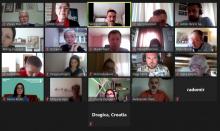
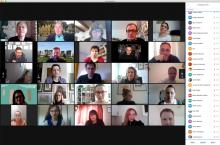
The conflicts of the recent past need to be taught about impartially if we want to avoid future conflicts, assessed history teachers from Croatia, Serbia, Bosnia-Herzegovina, Montenegro and Macedonia participating in the webinar organized by SENSE Center and HUNP - the Croatian History Teachers' Association.
In the past two months, the Montenegrin public television (TVCG) has shown seven documentaries created and produced by SENSE News Agency between 2001 and 2017, when the agency actively covered the work of the Yugoslav War Crimes Tribunal. The serial of documentaries was named "Dealing with the Past."
A webinar called "De-weaponizing History: How to Prevent History Teaching from Becoming a Continuation of War by Other Means" brought together more than 30 history teachers from primary and secondary schools in Croatia, Serbia, Bosnia and Herzegovina North Macedonia and Slovenia. This online seminar was organized by SENSE - Transitional Justice Center and the Croatian History Teachers Association
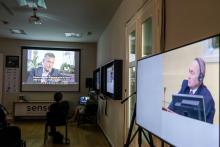
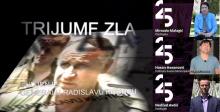
A video summary of the testimonies of former Bosnian Serb soldiers, policemen and officials from the Srebrenica area was broadcast at the SENSE Center on the fourth day of the campaign. Those witnesses for the most part testified when they were compelled by subpoena. That video was followed by recorded statements of Jean-Rene Ruez, head of the Srebrenica investigation, Mark Harmon, prosecutor, and Stefanie Frease, investigator
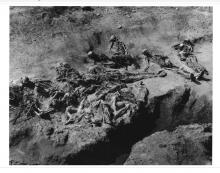
SENSE - Transitional Justice Center set up an online gallery of photographs entitled "Howls from The Mass Graves", as part of its campaign "Srebrenica 25: Together Against the Denial Virus". The photographs were taken by British forensic photographer Tim Loveless during the exhumations of the mass graves in the wider Srebrenica area in 1999 and 2000.